What changed for someone booking treatment?
On 5 October 2026, Türkiye’s Ministry of Health announced an update to its lists of facilities authorised for international health tourism. Its notice gives patients two starting points. One identifies the place providing healthcare. The other identifies the intermediary arranging a trip. Before paying a deposit, establish which organisation fits each role in your own booking. Save what you find, together with the date you checked. Ministry announcement of 5 October
This matters if you are comparing offers from abroad, if a family member is arranging the trip on your behalf, or if a coordinator has moved your appointment to another building. The October announcement describes a list update. It does not say that every entry is new, identify which individual businesses gained or lost authorisation, or grade the quality of their work. A reader arriving months later should follow the Ministry’s current links and look at the date displayed on the relevant list.
Start with the address where the treatment will happen
A website might advertise an Istanbul consultation, an airport pickup and surgery under one memorable name. The address in its footer could belong to an office. The location pinned in your welcome message might be a hotel lobby. Neither answers the practical question of where you will receive anaesthesia, undergo the procedure or return for a dressing change. Ask for the full Turkish facility name and street address for each clinical appointment. Keep the spelling the provider supplies, including Turkish characters.
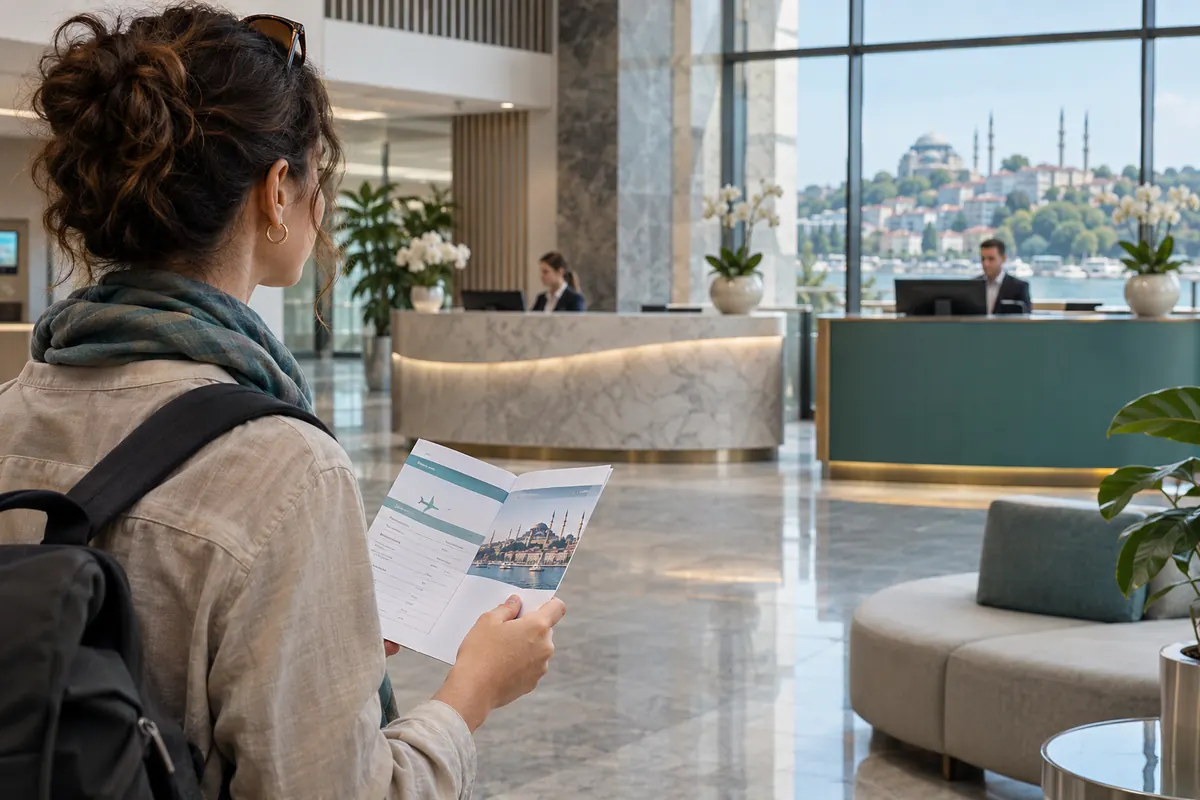
Suppose an offer describes a “Bosphorus package” without identifying the hospital. Your coordinator sends a picture of a marble reception desk. An image search might recognise the building, but a written confirmation gives you a clearer starting point. Ask, “Which institution will admit me on the proposed date, and what name should I look for in the Ministry’s facility list?” If two places share the work, ask which will perform the intervention and which will provide follow-up. The names in this example are illustrative.
Choose the directory that matches the provider
The Ministry’s Turkish facility page separates hospitals, medical centres, private practices and other healthcare facilities. Start with the category supplied by the provider. A doctor’s private consulting room and the hospital where the same doctor operates may appear under different headings. Searching only the hospital document for a practice name can produce an apparent mismatch. The Ministry also provides an English directory that explains the categories. Check the dates on the two versions before relying on a downloaded copy. Turkish facility lists · English facility directory
Search using a distinctive part of the Turkish name, then check the surrounding details. A translation such as “International Surgical Centre” may be marketing language that nobody uses on an official form. Try the original spelling, a shorter portion without punctuation, and the city or district where available. An exact match on a generic word like “health” tells you little. If the document opens as an image and searching returns nothing, enlarge the relevant pages or ask the provider to identify its entry. Preserve the document heading when taking a screenshot so another reader can tell which list you searched.
Check the intermediary separately
Who booked your airport transfer, quoted the package price or assigned the interpreter? Sometimes a hospital’s own international patient office coordinates these arrangements. In other cases an independent company provides them. Ask the person who sent the offer to explain the relationship. The Ministry directs readers to HealthTürkiye for information about authorised intermediaries. Search there for the company identified in your agreement. Looking up an intermediary and finding its name leaves the separate question of the operating facility open. Ministry notice about intermediaries · HealthTürkiye agency directory
For example, a travel coordinator might have a registered company name that differs from the short label used in messages. Ask for both in the same email. If the contact says it acts for the hospital, request the international patient desk’s contact details and obtain confirmation through a number or address published independently by the institution. Keep the answer with the offer. You can now explain, in one sentence, who offered the travel arrangements and who agreed to provide the healthcare.
Build a booking record that another person can read
Create a small folder before information starts to arrive through different channels. Include the original quotation, the version of the itinerary you accepted, a copy of the directory result and the email naming the facility. Label a screenshot with the date and source address. If you save a PDF, retain the filename and the page containing the relevant entry. A cropped photograph of a certificate in a messaging thread is less useful when you cannot tell who sent it, when it was taken or which premises it covers.
Give each item a purpose. The quotation describes what was offered. A bank receipt records where money went. A hospital letter can confirm an appointment. A directory entry answers a particular authorisation question. If a friend is travelling with you, make a short practical handover containing the institution’s switchboard, appointment time and location. Store personal documents separately from the general directory material. A relative helping with a lookup has no need to receive your full health history, card details or passport scan.
Read a plausible mismatch before drawing conclusions
Imagine the brochure names a clinic in Şişli, the booking email gives a hospital in Ataşehir, and your invoice names a travel business. Each detail might be accurate: the surgeon sees prospective patients at one address, operates at another and has no role in selling accommodation. It is also possible that the coordinator supplied an outdated location. Do not try to settle the question through the similarity of the logos. Write down the three names and ask each relevant party to confirm the part it handles.
Another example is a clinic group with branches in several provinces. The branch pictured on social media could be a flagship building, while your appointment is at a smaller unit. Ask for the specific city, district and facility designation. If the answer describes a different branch, repeat the directory search using that location. When the revised arrangement changes your travel or accommodation costs, ask for an updated quotation before deciding whether to accept. Identifying the parties involved in treatment
What to do when a search produces no clear match
Write down exactly what you tried. Record the directory date, the category, the spelling and the result. Send the booking contact a short factual question such as “I searched the hospitals list under the name on my itinerary and could not identify this address. Please send the Turkish registered name, the facility type and a reference that lets me locate the entry.” A missing result is a reason to investigate. It is insufficient evidence on its own for a public accusation.
If the answer consists entirely of a cropped badge or a private review page, repeat the unresolved question. An expired link might reflect a moved file; a spelling difference might reflect an abbreviation. Where uncertainty persists, use the contact route published by the Ministry’s department and describe the mismatch without attaching sensitive records. A general directory query usually needs a facility name and location. Keep your own decision simple. If knowing the identity of the provider is a condition of paying, wait until you have an answer you can verify.
When the booking changes after you have paid
A change message can arrive as casually as a driver sending tomorrow’s pickup time. Read more closely if it changes the hospital, the treatment date or the contracting business. Ask for a replacement itinerary listing the old and new arrangements, the reason for the substitution, and whom to contact about alternatives. Verify the replacement facility using its own details. Retain both versions so you can reconstruct what you accepted if a question arises later.
Consider a patient who prepaid for two appointments at a single location to minimise stairs after surgery. Moving the second visit across town may affect accessibility, companion transport and the last night’s accommodation. A directory check only addresses the provider’s identity and listed status. Ask practical questions about wheelchair access, pickup arrangements, onward travel and the person responsible for coordinating a change. If you are already receiving care, direct questions about safe transfers and timing to the treating clinical team.
Separate authorisation from the questions a clinician must answer
A match on the Ministry list is useful, but it cannot tell you whether a particular procedure suits your medical circumstances. Nor does it identify the individual scheduled to operate, explain the risks discussed with you or decide whether an insurance policy covers additional treatment. Ask the facility who will conduct the consultation, who will perform the procedure, where you can review written information and what follow-up contact you will have once you travel home. Take clinical questions to a qualified professional.
If a salesperson promises that every unexpected expense is included, ask to see the exact wording and the name of the organisation making the promise. Does it mention an extra night in hospital, a repeat examination, local transport or changes to flights? Does a separate insurer decide coverage? Save the policy and contact details if one exists. A directory search cannot interpret a contract. Questions to ask about complication insurance
A short enquiry you can adapt
“Thank you for sending my itinerary. Before I confirm, please identify the healthcare facility that will admit me, its registered Turkish name and full address, and the category in which I can find it in the Ministry directory. Please also identify the company arranging my travel and explain whether it is the hospital’s own service or an independent intermediary. If my consultation, procedure and follow-up take place at different locations, please list each address beside the corresponding appointment.”
Adapt that enquiry to your circumstances. A dental patient returning for a later fitting may need the laboratory delivery contact and the address for the second visit. Someone combining investigations with a procedure may want written confirmation of where samples will be taken and where results can be collected. A companion booking accessible accommodation might need the nearest entrance and the reception hours. Keeping those operational details next to the verified institutional names makes the itinerary usable after you arrive.
Reconstruct an earlier trip using dated material
People sometimes discover the directory only after returning home. Start with the treatment date. Today’s search cannot conclusively establish what appeared on a list when you travelled last year. Save today’s result with its own date and collect contemporaneous documents separately. A stamped admission sheet, discharge letter, itemised bill or theatre appointment can help identify the facility at the relevant time. A forwarded image with no date is a weaker starting point. Request historical confirmation from the appropriate institution if that question affects a dispute.
Prepare a brief chronology for anyone helping you. Include the first enquiry, reservation, deposit, any change of venue, admission, discharge and follow-up. Mark which facts are confirmed by a document and which you remember. A lawyer assessing a disagreement will need to connect the correct parties to the particular promises and events. Someone reviewing the quality of treatment will also need clinical records. A directory entry alone does not answer either question. Health tourism terminology
Check a package paid for by somebody else
People arranging care through an employer, sports club or family association may never see the original sales correspondence. Ask whoever made the reservation for a copy of the supplier confirmation. A payroll deduction or membership voucher may carry the sponsor’s name without identifying the hospital. Match the voucher reference to the appointment letter, and check whether your companion’s booking has a separate reference. That distinction matters when somebody at reception is searching for a reservation made under a different surname.
For a group travelling together, request an individual itinerary for each patient. One person might attend an eye examination while another receives dental work. Shared flights and a single minibus do not establish a shared treatment location. An interpreter might accompany the group to the first destination and be unavailable for the second. Ask where each traveller will meet their own clinical contact and how they can reach reception independently if the group separates.
Make the answer usable when you arrive
Check the practical details in daylight, before a midnight arrival or a patchy mobile connection complicates the conversation. Save an offline map pin, the Turkish street spelling, the district and the name displayed above the hospital entrance. Distinguish the outpatient wing from the main admissions building and check which entrance accepts arrivals at your scheduled hour. A screenshot of an office tower can easily resemble several neighbouring buildings. The correct address written in Turkish can help a driver resolve the last few streets.
If reception cannot locate the booking, show the confirmation reference and ask a named member of staff to verify the institution and department. Record what they confirm, including the time and any replacement destination. Resist the pressure to share a broad set of documents with a stranger who offers assistance in the lobby. Use an established hospital contact or the intermediary number you verified earlier. This small preparation gives both a patient and companion an independent way to resolve ordinary travel confusion.
A final check before the payment screen
Read your booking material as if you had to hand it to someone at the arrivals gate. Could they point to the actual hospital on a map, call the right organisation about a delayed flight and explain the planned sequence of visits? Could they find the official entry using the details you saved? If one question remains open, send it to the person capable of answering it. That final exchange often reveals a practical omission while there is still time to fix it.
Discuss your situation
Share a brief outline with our legal team. Please do not send full medical records or identity documents in the initial enquiry.