Begin with the line that needs attention
You have returned home and a document from your Turkish clinic gives the wrong operation date. Or the discharge summary lists a medicine you never took. Start with a copy of the page, identify the exact entry and decide who needs the information corrected. Keep the original unchanged. If a discrepancy could affect treatment you are receiving now, show the document to your current clinician and explain the concern promptly. Do not wait for an administrative answer before seeking medical advice.
Article 17 of Türkiye’s Patient Rights Regulation allows a patient to ask a healthcare institution to complete, clarify or correct incomplete, uncertain or incorrect medical and personal information in its records. It also addresses objections to reports and requests for a new report from the same or another institution. The most useful request tells the recipient which of those outcomes you want. An uncertain abbreviation, a typing error and a disagreement about a clinical assessment call for different responses. Patient Rights Regulation, Article 17
Decide whether you need a correction, clarification or further opinion
Take an easily checked example. Your appointment confirmation and a dated invoice show a consultation on Monday, but a letter prepared afterwards says Thursday. Before calling it a mistake, inspect the labels. Monday could be the examination date and Thursday the signature date. If both fields describe the examination, identify that conflict and attach the corroborating material. Ask the facility to check its underlying appointment or admission record and explain the outcome.
Clinical judgement is different. A specialist described a symptom as mild during an examination. You remember considerable discomfort later that evening. Both accounts may have a place in the record. Set out when the symptom changed, who observed it and when you communicated it. Ask whether your later account can be added, whether the wording describes the condition at the time of examination, or whether a further assessment is appropriate. Altering a historical opinion without examining its context could make a file harder for the next clinician to interpret.
Locate the record holder before sending private information
The person who arranged your airport pickup may be the only contact you know. That does not make their messaging account the right destination for a medical document. Read the letterhead, admission paperwork and privacy notice. Identify the hospital or practice that created the entry. Ask its patient relations or records office for the appropriate procedure. Where you are exercising rights under data protection law, identify the data controller and its published application channel.
For example, your hotel booking confirmation, laboratory result and surgeon’s follow-up note may come from three separate organisations. A hotel cannot usually resolve the identity shown on a pathology accession label. A hospital may need to involve the laboratory that issued a report. Initially disclose only enough information to route the enquiry. Ask the responsible organisation how it authenticates someone who lives abroad. Use its independently published contact details before transmitting identity information. Obtaining records after leaving Türkiye
Keep the original and make a working copy
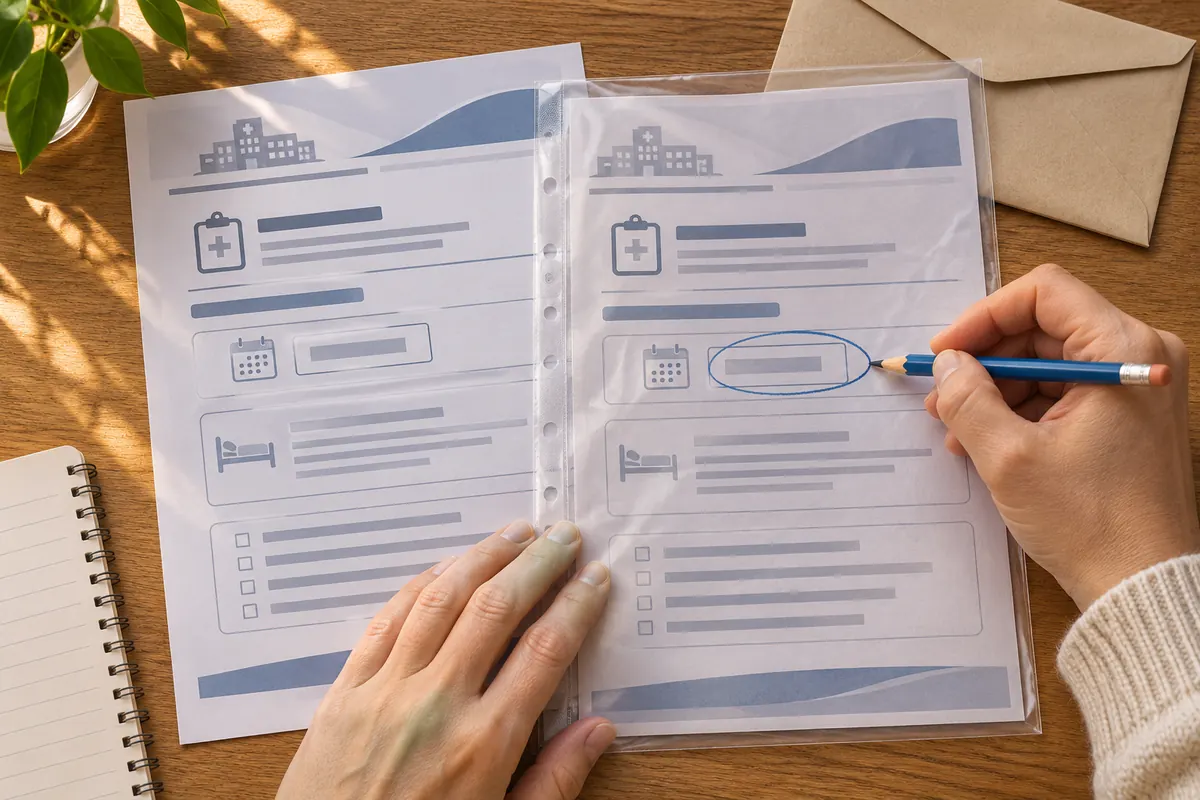
Download the original file, including all pages, and retain the message that delivered it. If you received paper, scan both sides where relevant. Store the original in a folder reserved for unchanged documents. Work on a separate copy. Circle the disputed entry or refer to its page, heading, paragraph and row. Preserve surrounding context such as the examination date, document author and unit. A cropped line without its heading can make a clear error look ambiguous.
Give attachments names that tell the recipient why they matter. A boarding pass might establish when you travelled, although it cannot by itself establish when a particular examination occurred. An appointment text identifies a planned visit. An attendance confirmation is stronger evidence that you actually attended. If an updated report uses a new reference number, keep a note linking it to the earlier version. This simple approach lets another reader reconstruct the sequence without relying on your memory of download times.
Use evidence proportionate to the discrepancy
For a misspelt surname, identify the spelling used at registration and the spelling shown on the disputed report. A compound family name may have been shortened because a field was too small. Accented letters can change when text passes between systems. Explain which form matches your identity document, how the error affects matching and which output you need corrected. Use the secure identity verification process the provider specifies. Sending a full passport to several unrelated email addresses creates unnecessary exposure.
A mistaken side of the body requires different handling. If the descriptive report refers to the left knee and a diagram marks the right, ask the responsible clinical service to reconcile those entries against the underlying record. Identify the inconsistency without selecting a side solely on the basis of the illustration. If another practitioner is about to rely on either description, flag it directly before the appointment. A records administrator can route the question, but interpretation of clinical findings belongs with the appropriate professional.
Frame a single request that can be answered
Use a short subject line naming the document and visit month. Introduce yourself using the details under which the facility registered you. State the current wording, the proposed correction or clarification and the evidence attached. Explain the practical consequence. A reader who understands that an overseas radiology department cannot match two identifiers has a clearer task than one receiving a general complaint that “all the paperwork is wrong.”
Here is an example in English to help organise your facts. “The discharge summary for my March visit lists the telephone number of a previous emergency contact. Please verify the current details through your secure patient channel and update the active contact field. Please confirm whether the printed summary can be reissued and whether the old number remains visible to the team organising follow-up.” This request distinguishes an active contact field from the historical record of who accompanied you. Adapt it to the institution’s procedure and use Turkish for a formal data-controller application under the communiqué discussed below.
When the Turkish data protection procedure is relevant
Article 11 of Law No. 6698 includes a right to seek rectification of inaccurate or incomplete personal data from the controller. It also allows the individual to request that the relevant rectification be reported to third parties to whom the data were transferred. If an incorrect personal detail was sent to an outside provider, identify the recipient if known and say what confirmation you need. A correction in one organisation’s database may take time to reach a copy already held elsewhere. Personal Data Protection Law, Articles 11 and 13
The Authority’s communiqué explains how to apply. Make the request in Turkish. Its permitted methods include a written application, registered electronic mail, secure electronic signature, mobile signature, an email address previously recorded in the controller’s system, or a system provided for such applications. Check the controller’s instructions before selecting a route. The communiqué specifies identifying and notification details, including nationality and passport or applicable identity number for a foreign applicant, the subject of the request, supporting information and a signature for written requests. Use the authority’s full list when preparing the application. Data Protection Authority communiqué, Articles 4–6
For a valid application through that procedure, Article 13 requires a response as soon as the nature of the request allows and within thirty days at the latest. Record delivery, keep the acknowledgement and retain the complete reply. An informal call to a booking coordinator can be useful for finding the correct office, but do not assume that it establishes the start of a formal period. If you are considering a complaint to the Authority, consult Article 14 promptly about its separate rules and time limits. A data correction request may run alongside other matters with their own deadlines. Authority’s text of the law
Compare Turkish and translated versions carefully
Suppose a Turkish discharge letter records a planned follow-up and an English summary describes it as completed. Check who produced each document. A clinic-issued translation, a translation you commissioned and a machine-generated preview have different origins. Mark the sentence in each version and ask whether the clinical source is accurate. If the original is correct, a corrected translation and a written explanation may resolve the practical problem. Keep both versions and identify which one your overseas doctor received.
Where the mismatch involves a decimal, measurement unit, drug name or frequency, avoid translating it back and forth yourself to find an answer. Ask the clinical team to explain the intended entry and give that clarification to the clinician managing your care. Distinguish a prescription from a note about treatment actually administered. A familiar-looking abbreviation may carry a different meaning in a local department. The purpose of the enquiry is to get a reliable explanation from someone authorised to interpret the information.
If the page appears to belong to another patient
A mixed attachment can contain observations that have nothing to do with you. Stop circulating it. Contact the issuer through a verified route, identify the document reference and ask how to return or securely handle the material. Avoid forwarding it to every address copied on the original correspondence. Your first message can explain that the attachment appears to concern somebody else without quoting their diagnosis or reproducing their personal identifiers.
Ask the facility to check two issues separately. First, has somebody else’s page been included in your file? Second, has a copy of your own result been sent elsewhere or omitted from the packet? Keep the correspondence and request a complete, verified set relating to your visit. If you already shared the mixed packet with your treating team, alert its records office and ask how to replace it securely. An institution responsible for one copy may have no technical access to another organisation’s archive.
Check what the reply actually fixes
An acknowledgement confirms receipt. A revised cover letter may correct a typographical error while leaving the underlying laboratory report unchanged. On receiving a response, compare the specific fields you identified and record what changed, who issued the amendment and the date on the replacement. If the provider says a historical entry must remain visible, ask how the amendment is linked to it and what a future reader will see. Preserving an audit trail can help explain why two authentic copies differ.
A clinic might confirm that it corrected the database but cannot replace an image embedded in an older PDF. Ask for a signed clarification or updated extract that identifies the original document. If the corrected material must reach a GP, dentist, physiotherapist or insurer, agree a secure route and check receipt. A person reviewing a reimbursement request may need an itemised change to the invoice, while a physiotherapist might only need the corrected operation details. Share the minimum information appropriate to each purpose.
Prepare for a follow-up visit while a reply is pending
Imagine an outpatient appointment falls before the provider can send a revised summary. Bring a small packet containing the original, your dated enquiry and any acknowledgement. Put a removable note on the front identifying the unresolved line. Ask the receptionist how to flag the discrepancy for the examining clinician. A handwritten amendment made directly on a signed document may later look like the author’s own handwriting. Keeping your observation on a separate sheet makes its origin easier to recognise.
If you rely on an interpreter, agree in advance which words need exact translation. A sentence about an allergy, a previously implanted device or an examination performed under sedation deserves particularly careful handling. Ask the interpreter to distinguish what appears in the document from what you are reporting from memory. Before leaving, check the written appointment summary and the addressee for further correspondence. This can prevent an unresolved administrative error from following you into another referral.
Organise corrections for a family member living overseas
A relative can help with scanning, sorting and translating, but the patient and the helper may have different permissions. Identify who will make the application, who may receive the answer and how the institution verifies that authority. A shared family inbox can expose sensitive material to somebody outside the intended conversation. Choose a private delivery destination and confirm the preferred contact language. If the patient changes address during a move, tell the office handling the outstanding enquiry so the replacement does not go astray.
Keep a short index of what was returned. An encrypted attachment might expire before your next overseas appointment. Download it through the agreed secure channel, verify that every page opens, and store it somewhere you can retrieve without depending on a temporary portal password. If a replacement is unreadable or incomplete, refer to the earlier acknowledgement when requesting a legible copy.
Keep a compact handover if the issue remains unresolved
Prepare a one-page comparison with the original statement, your evidence, the provider’s response and the question that remains. For a dispute about dates, use a calendar. For a disagreement over translations, put the two sentences side by side. For a technical diagnosis, gather reports and images for a qualified clinician. Where somebody disputes legal responsibilities or a refusal affects an important decision, seek advice on the applicable process with the complete chronology to hand. Right of access to medical records
Close your file when you can answer three questions. Which version now guides your care? Who holds an older copy that matters? Where is the explanation connecting the two? Write the answers on a short cover sheet and keep it with the supporting correspondence. Months later, a new doctor should be able to see why the documents differ and which office confirmed the correction, without having to reconstruct a conversation from your phone.
Discuss your situation
Share a brief outline with our legal team. Please do not send full medical records or identity documents in the initial enquiry.